
Introduction
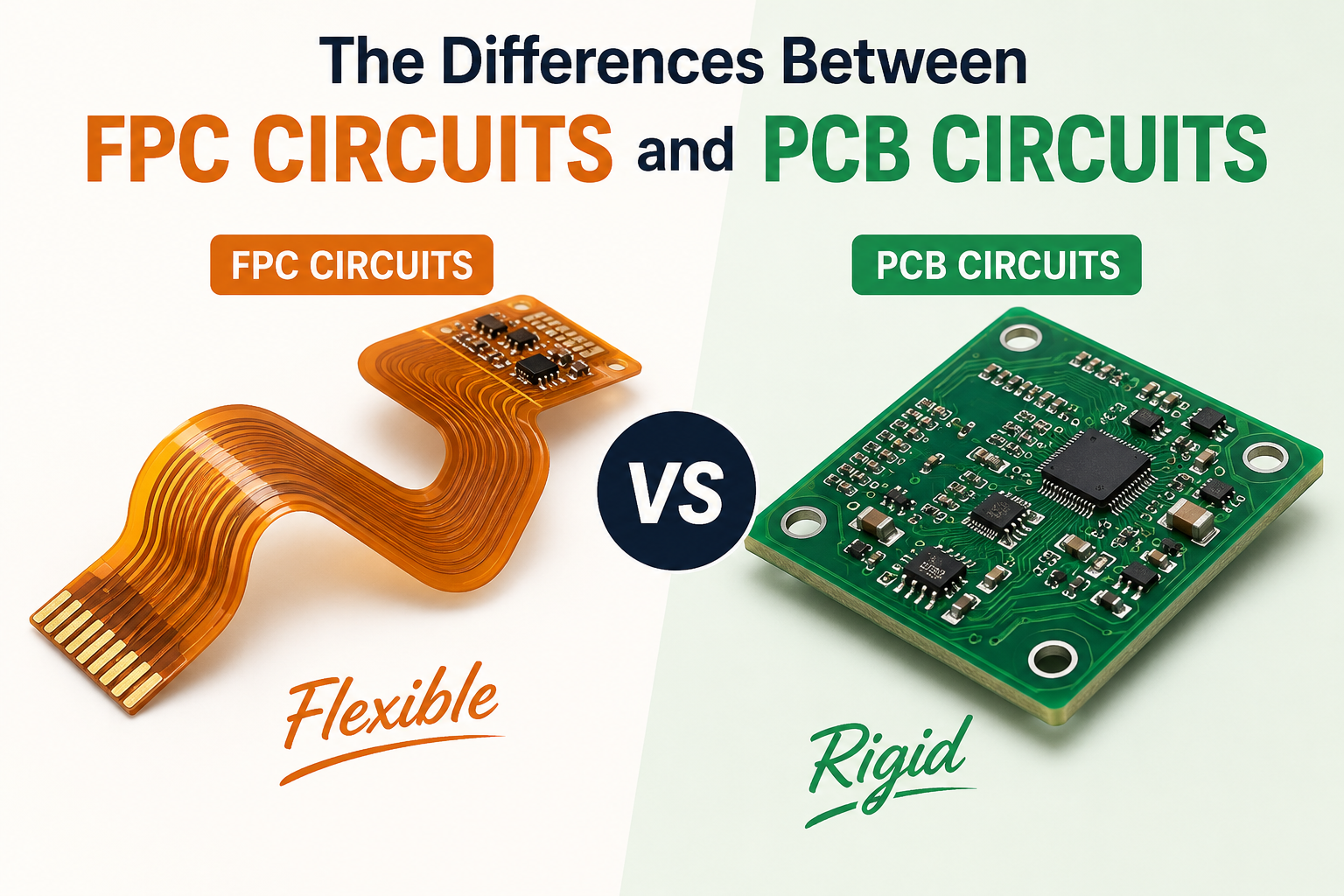
As electronic devices become smaller, lighter, and more advanced, manufacturers require circuit solutions that can meet increasingly complex design demands. Two of the most widely used circuit technologies in the electronics industry are Flexible Printed Circuits (FPCs) and Printed Circuit Boards (PCBs). While both serve the essential function of connecting and supporting electronic components, they differ significantly in terms of structure, flexibility, applications, and performance.
Understanding the differences between FPC circuits and PCB circuits is crucial for selecting the right solution for your product design. At Cutek Circuits India Pvt Ltd, we specialize in delivering high-quality PCB and flexible circuit solutions tailored to the needs of modern industries.
What is an FPC Circuit?
A Flexible Printed Circuit (FPC) is an electronic circuit built on a flexible substrate, typically made from polyimide or polyester film. Unlike rigid boards, FPCs can bend, twist, and fold without affecting electrical performance.
Key Features of FPC Circuits
- Lightweight and thin design
- Excellent flexibility
- High resistance to vibration
- Space-saving installation
- Reduced wiring complexity
- Suitable for dynamic applications
FPCs are commonly found in smartphones, laptops, medical devices, cameras, wearable technology, and automotive electronics.
What is a PCB Circuit?
A Printed Circuit Board (PCB) is a rigid board used to mechanically support and electrically connect electronic components through conductive pathways.
PCBs are usually manufactured using fiberglass-reinforced epoxy laminate materials such as FR4.
Key Features of PCB Circuits
- Strong mechanical stability
- High component density
- Excellent durability
- Cost-effective for large production runs
- Suitable for complex circuitry
- Easy assembly and testing
PCBs are widely used in industrial equipment, consumer electronics, telecommunications systems, power supplies, and automation systems.
FPC vs PCB: Understanding the Key Differences
- Flexibility
FPC Circuits
FPCs are designed to bend, fold, and flex repeatedly without damage. This makes them ideal for compact devices with moving parts.
PCB Circuits
Traditional PCBs are rigid and cannot flex without risking structural damage.
Winner: FPC Circuits
- Weight and Thickness
FPC Circuits
Flexible circuits are significantly lighter and thinner than rigid PCBs, helping manufacturers reduce product size and weight.
PCB Circuits
PCBs are thicker and heavier due to their rigid substrate construction.
Winner: FPC Circuits
- Mechanical Strength
FPC Circuits
While durable, FPCs are generally more susceptible to physical damage if not properly supported.
PCB Circuits
Rigid PCBs offer superior structural strength and support for larger electronic assemblies.
Winner: PCB Circuits
- Space Utilization
FPC Circuits
FPCs can be folded and routed through tight spaces, making them ideal for compact electronic products.
PCB Circuits
Require dedicated mounting space and cannot conform to unusual shapes.
Winner: FPC Circuits
- Manufacturing Cost
FPC Circuits
Flexible circuits typically involve more complex manufacturing processes and may have higher initial production costs.
PCB Circuits
PCBs are generally more economical for standard applications and large-volume production.
Winner: PCB Circuits
- Reliability in Dynamic Applications
FPC Circuits
Excellent for applications involving constant movement, vibration, or repeated flexing.
PCB Circuits
Best suited for stationary electronic systems.
Winner: FPC Circuits
- Assembly Complexity
FPC Circuits
May require specialized assembly techniques and handling procedures.
PCB Circuits
Easier to assemble using conventional manufacturing processes.
Winner: PCB Circuits
Comparison Table: FPC vs PCB
| Feature | FPC Circuit | PCB Circuit |
| Flexibility | High | None |
| Weight | Lightweight | Heavier |
| Thickness | Ultra-thin | Thicker |
| Durability in Motion | Excellent | Limited |
| Mechanical Strength | Moderate | High |
| Space Efficiency | Excellent | Moderate |
| Manufacturing Cost | Higher | Lower |
| Assembly Process | Complex | Simpler |
| Suitable for Compact Devices | Yes | Limited |
| Suitable for Heavy Components | Limited | Excellent |
Applications of FPC Circuits
Flexible circuits are commonly used in:
- Smartphones
- Tablets
- Wearable Devices
- Medical Equipment
- Automotive Electronics
- Aerospace Systems
- Digital Cameras
- LCD Displays
- Robotics
Their flexibility enables innovative product designs while reducing overall device size.
Applications of PCB Circuits
PCBs remain the preferred choice for:
- Industrial Automation Equipment
- Power Electronics
- Telecommunications Systems
- Consumer Appliances
- Control Panels
- Computer Hardware
- LED Lighting Systems
- Manufacturing Machinery
Their rigidity and strength make them ideal for supporting complex electronic assemblies.
When Should You Choose FPC?
Choose an FPC circuit when your application requires:
- Compact product design
- Lightweight construction
- Continuous movement or vibration
- Space optimization
- Flexible installation paths
Examples include wearable devices, foldable electronics, and compact consumer products.
When Should You Choose PCB?
Choose a PCB when your application requires:
- High mechanical strength
- Cost-effective production
- Support for larger components
- Complex circuit layouts
- Stationary operation
Examples include industrial machinery, power supplies, and automation systems.
Hybrid Solutions: Combining FPC and PCB
Many advanced electronic products now utilize rigid-flex technology, combining the benefits of both FPCs and PCBs. These hybrid solutions provide flexibility where needed while maintaining structural strength in critical areas.
Rigid-flex circuits are increasingly popular in aerospace, medical, military, and high-performance consumer electronics applications.
Why Choose Cutek Circuits India Pvt Ltd?
At Cutek Circuits India Pvt Ltd, we offer advanced PCB and flexible circuit manufacturing solutions designed to meet the evolving demands of modern industries.
Our Expertise Includes:
- Flexible Printed Circuits (FPC)
- Single-Sided PCBs
- Double-Sided PCBs
- Multilayer PCBs
- Rigid-Flex Circuits
- Prototype Development
- High-Volume Production
- Custom Electronic Circuit Solutions
With a commitment to quality, innovation, and precision engineering, we help businesses develop reliable and high-performance electronic products.
Conclusion
Both FPC circuits and PCB circuits play essential roles in modern electronics manufacturing. While FPCs offer unmatched flexibility, lightweight construction, and space-saving advantages, PCBs provide superior strength, durability, and cost-effectiveness.
The right choice depends on your product’s design requirements, operating environment, and performance expectations. By partnering with Cutek Circuits India Pvt Ltd, you gain access to expert guidance and world-class circuit manufacturing solutions that ensure your project’s success.
Frequently Asked Questions (FAQs)
- What is the main difference between FPC and PCB?
The primary difference is that FPC circuits are flexible and can bend, while PCB circuits are rigid and maintain a fixed shape.
- Are FPC circuits more expensive than PCBs?
Yes, FPCs generally have higher manufacturing costs due to specialized materials and production processes.
- Which is better for compact electronic devices?
FPC circuits are better suited for compact devices because they save space and can be folded or bent.
- Can FPC circuits replace PCBs completely?
Not always. The choice depends on the application’s mechanical, electrical, and cost requirements.
- What industries commonly use FPC circuits?
Consumer electronics, medical devices, automotive systems, aerospace, and wearable technology industries frequently use FPCs.
- What are rigid-flex circuits?
Rigid-flex circuits combine rigid PCB sections with flexible circuit sections to provide both strength and flexibility.
- Are PCB circuits more durable?
PCBs offer greater structural strength, while FPCs provide better durability in applications involving movement and vibration.
- Which circuit type is easier to manufacture?
Traditional PCBs are generally easier and more cost-effective to manufacture than flexible circuits.
- How do I choose between FPC and PCB?
Consider factors such as space constraints, flexibility requirements, mechanical strength, budget, and application environment.
- Does Cutek Circuits India Pvt Ltd manufacture both FPC and PCB solutions?
Yes, Cutek Circuits India Pvt Ltd provides high-quality FPCs, PCBs, rigid-flex circuits, and customized electronic circuit solutions for various industries.