
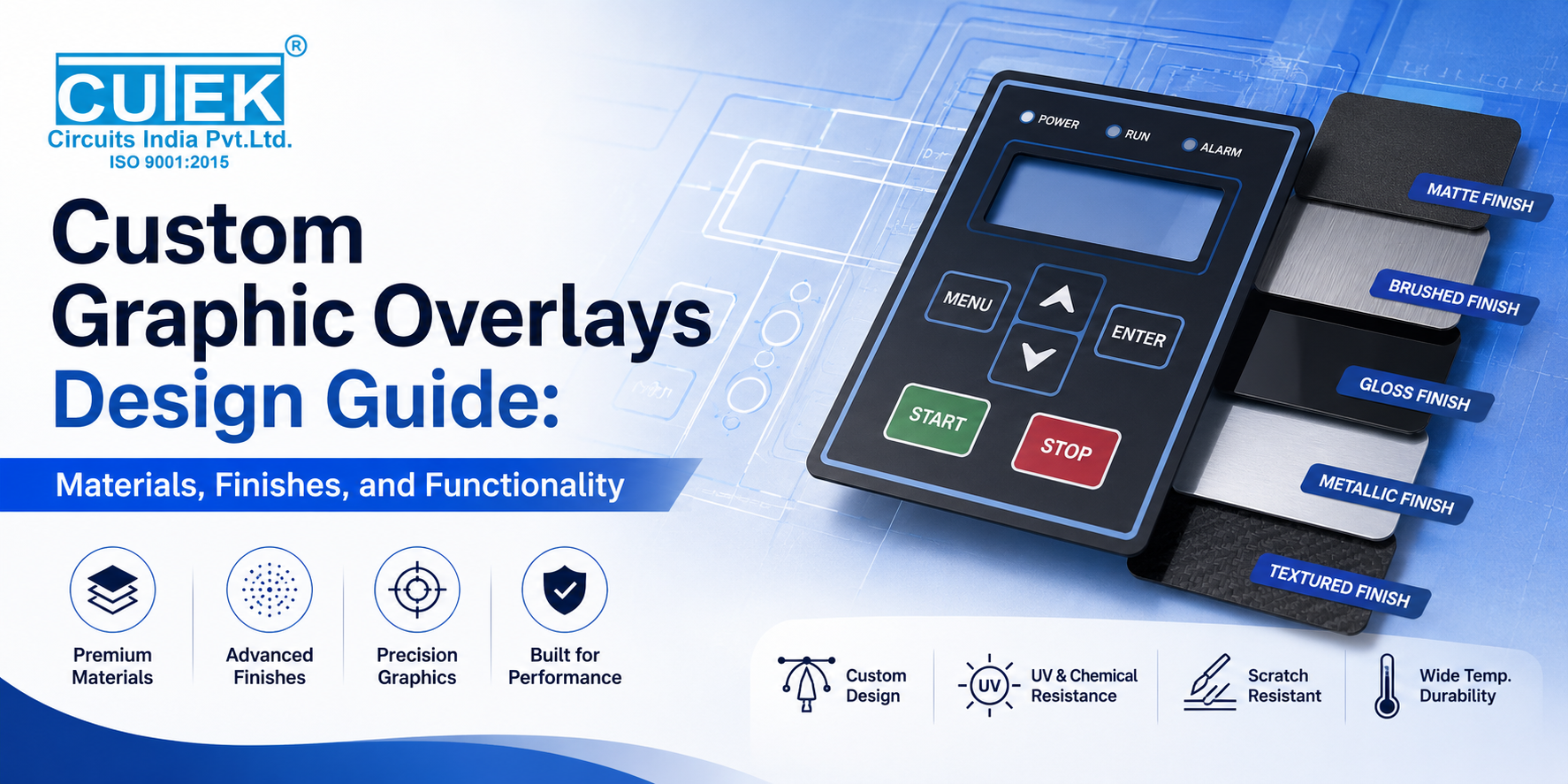
Introduction
Custom graphic overlays play a vital role in modern electronic and industrial equipment. They are more than just decorative layers placed over control panels or membrane switches — they improve user interaction, enhance branding, and provide protection for electronic interfaces. From medical devices and industrial machinery to consumer electronics and automotive applications, graphic overlays are essential for both functionality and aesthetics.
At Cutek Circuits India Pvt. Ltd., we specialize in designing and manufacturing high-quality custom graphic overlays tailored to meet industry-specific requirements. This guide explores the key materials, finishes, and functional considerations involved in creating durable and effective graphic overlays.
What Are Graphic Overlays?
Graphic overlays are printed layers placed on top of electronic interfaces, membrane switches, or control panels. These overlays display instructions, branding, icons, and operational information while protecting the internal circuitry from dust, moisture, chemicals, and wear.
Graphic overlays are commonly used in:
- Medical equipment
- Industrial control panels
- Automotive dashboards
- Home appliances
- Consumer electronics
- Telecommunications devices
- Fitness equipment
A well-designed graphic overlay improves user experience while ensuring product durability and professional appearance.
Importance of Custom Graphic Overlay Design
Custom graphic overlays are designed according to the specific needs of the product and application environment. A properly engineered overlay ensures:
- Clear and intuitive user interaction
- Enhanced product appearance
- Resistance to environmental conditions
- Long-lasting performance
- Better brand visibility
- Improved tactile feedback
Choosing the right materials and finishes is critical to achieving these benefits.
Common Materials Used in Graphic Overlays
Polyester (PET)
Polyester is one of the most widely used materials for graphic overlays because of its excellent durability and flexibility.
Benefits of Polyester:
- High resistance to chemicals and solvents
- Excellent dimensional stability
- Long operational life
- Suitable for embossing and tactile buttons
- Ideal for harsh industrial environments
Applications:
- Industrial equipment
- Medical devices
- Membrane switch panels
- Outdoor control systems
Polycarbonate (PC)
Polycarbonate is another popular material known for its clarity and cost-effectiveness.
Benefits of Polycarbonate:
- Excellent print quality
- Good impact resistance
- Easy to fabricate
- Cost-efficient for many applications
Applications:
- Consumer electronics
- Indoor control panels
- Appliance interfaces
Although polycarbonate offers good visual quality, it may not be as chemically resistant as polyester.
Vinyl
Vinyl is commonly used for less demanding applications where flexibility and affordability are priorities.
Benefits of Vinyl:
- Economical option
- Flexible and lightweight
- Easy customization
Applications:
- Promotional labels
- Low-cost electronic products
- Temporary interfaces
Types of Finishes for Graphic Overlays
The finish of a graphic overlay affects both appearance and usability. Different finishes are selected based on product requirements and environmental conditions.
Matte Finish
A matte finish reduces glare and fingerprints, making it ideal for products used in bright environments.
Advantages:
- Improved readability
- Professional appearance
- Scratch resistance
- Reduced reflections
Best Used In:
- Medical equipment
- Industrial control panels
- Outdoor devices
Gloss Finish
Gloss finishes create vibrant colors and an attractive appearance.
Advantages:
- Enhanced visual appeal
- Bright and sharp graphics
- Smooth surface texture
Best Used In:
- Consumer electronics
- Branding-focused products
- Retail devices
Textured Finish
Textured overlays provide better grip and durability.
Advantages:
- Improved tactile feel
- Enhanced scratch resistance
- Better usability in industrial conditions
Best Used In:
- Industrial machinery
- Heavy-duty equipment
- Rugged electronic systems
Functional Features in Graphic Overlays
Modern graphic overlays are designed with advanced functionalities to improve performance and user experience.
Embossing
Embossing creates raised surfaces or buttons on the overlay.
Benefits:
- Better tactile feedback
- Easier button identification
- Enhanced user interaction
Embossed overlays are widely used in membrane switches and control panels.
Transparent Windows
Transparent windows allow visibility for displays, LEDs, or screens.
Features:
- Clear display viewing
- Improved aesthetics
- Scratch-resistant coatings available
Backlighting Compatibility
Graphic overlays can be designed for LED or EL backlighting systems.
Benefits:
- Improved visibility in low light
- Modern appearance
- Enhanced functionality
Backlit overlays are common in automotive and medical devices.
Adhesive Selection
Choosing the right adhesive is essential for long-term performance.
Factors to Consider:
- Surface type
- Environmental conditions
- Temperature resistance
- Moisture exposure
High-quality adhesives ensure secure bonding and durability.
Design Considerations for Custom Graphic Overlays
Creating an effective graphic overlay requires careful planning and engineering.
Environmental Conditions
The operating environment influences material selection.
Consider:
- Exposure to UV light
- Moisture and humidity
- Chemicals and solvents
- Temperature variations
User Experience
The overlay should provide intuitive operation and clear instructions.
Important aspects include:
- Button placement
- Readable typography
- Color contrast
- Tactile response
Branding and Appearance
Graphic overlays also contribute to product branding.
Custom features may include:
- Company logos
- Brand colors
- Custom textures
- Premium finishes
Durability Requirements
Industrial and medical applications require overlays with high durability and resistance to wear.
Protective coatings can improve:
- Scratch resistance
- Chemical resistance
- UV protection
Industries That Use Graphic Overlays
Custom graphic overlays are widely used across multiple industries.
Medical Industry
Used in diagnostic equipment, monitoring devices, and laboratory instruments.
Industrial Automation
Control panels and machinery interfaces require durable overlays.
Automotive Industry
Used in dashboards, infotainment systems, and control interfaces.
Consumer Electronics
Graphic overlays improve the appearance and usability of electronic devices.
Telecommunications
Used in communication equipment and networking systems.
Why Choose Cutek Circuits India Pvt. Ltd.?
Cutek Circuits India Pvt. Ltd. is committed to delivering high-quality custom graphic overlays designed for durability, precision, and performance.
Our Expertise Includes:
- Custom membrane switch solutions
- Precision graphic overlay manufacturing
- Advanced printing technologies
- High-quality material selection
- Industry-specific customization
- Reliable quality control processes
We work closely with clients to develop overlays that meet technical, functional, and branding requirements.
Conclusion
Custom graphic overlays are a critical component in modern electronic products and control systems. Selecting the right material, finish, and functional features ensures long-lasting performance, improved usability, and enhanced product aesthetics.
Whether you need overlays for industrial equipment, medical devices, or consumer electronics, choosing an experienced manufacturing partner is essential.
Cutek Circuits India Pvt. Ltd. provides innovative and reliable custom graphic overlay solutions tailored to your application needs. With expertise in materials, finishes, and advanced functionality, we help businesses create durable and visually appealing user interfaces.
FAQs
- What is the purpose of a graphic overlay?
Graphic overlays protect electronic interfaces while improving usability, branding, and visual appearance.
- Which material is best for graphic overlays?
Polyester is often preferred for industrial applications due to its durability and chemical resistance.
- What is embossing in graphic overlays?
Embossing creates raised buttons or surfaces to improve tactile feedback and user interaction.
- Can graphic overlays be backlit?
Yes, graphic overlays can be designed for LED or electroluminescent backlighting.
- Are custom graphic overlays durable?
Yes, high-quality overlays are designed to resist scratches, chemicals, UV exposure, and moisture.
- Which industries use graphic overlays?
Industries such as medical, automotive, industrial automation, telecommunications, and consumer electronics widely use graphic overlays.
- What finish is best for industrial applications?
Matte or textured finishes are commonly preferred for industrial environments because they reduce glare and improve durability.
- Can overlays include company branding?
Yes, custom overlays can include logos, brand colors, and unique design elements.
- Why is adhesive selection important?
The right adhesive ensures strong bonding and long-term performance under different environmental conditions.
- Does Cutek Circuits India Pvt. Ltd. offer customized overlay solutions?
Yes, Cutek Circuits India Pvt. Ltd. provides fully customized graphic overlay and membrane switch solutions for various industries.